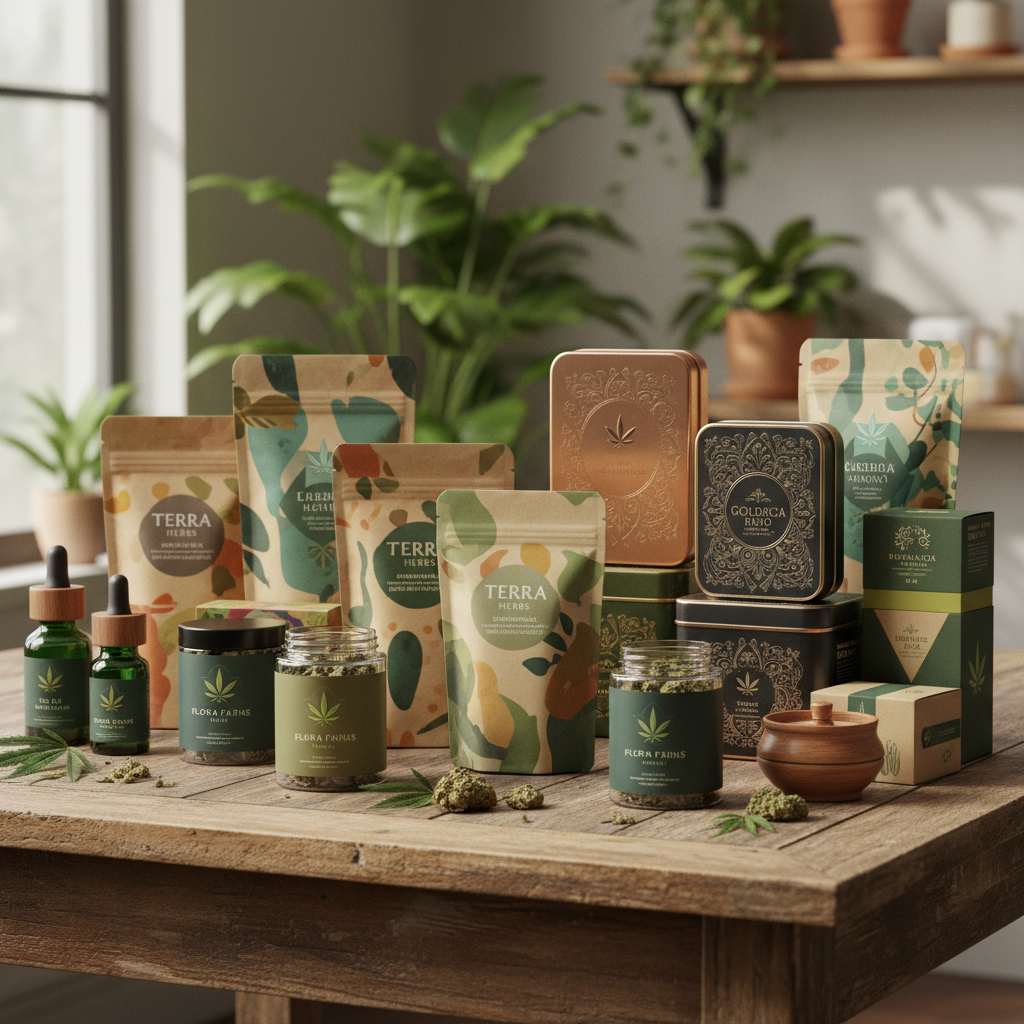
The cannabis sector has witnessed numerous advantages of legal cannabis momentum in many states and countries, but its environmental downside should not be overlooked. With marijuana legalization laws becoming more commonplace, a lot of plastic pop-top bottles and Mylar bags end up in landfills. This linear model, “take-make-dispose,” is not viable in the long run. The circular economy is the answer: a system that regenerates itself, where waste is no longer part of the equation, and materials are used over and over again. For the cannabis sector, rethinking 420 packaging through this perspective is not only an environmentally friendly decision but also a business necessity.
What Is the Circular Economy?
The traditional linear economy is one in which resources are extracted, used once, and discarded. However, the circular economy aims to close the loop. It is based on three principles: eliminating waste and pollution, circulating products and materials, and regenerating nature. What this means for 420 packaging is that it should be designed in a way to be more durable, reusable, or even recyclable rather than being single-use plastics.
The Problem with Traditional 420 Packaging
Presently, the packaging for 420 is mainly compliance and child-resistant, which is usually bad for the environment. It is well known that complex multi-layered materials, along with small plastic components, are rarely recycled. This, however, is leading to overproduction of waste, which can take hundreds of years to degrade. Therefore, if the industry is to go truly green, we need to consider the packaging lifecycle of 420 products even before they reach the shelves.
Innovative Designs for a Greener Future
To achieve major changes in the circular economy, innovation is the first thing that comes to mind. We can already observe a trend toward:
- Compostable Materials: These are plant-based bioplastics and hemp-derived papers that biodegrade and release nutrients in the soil.
- Recycled Content: Incorporation of post-consumer recycled (PCR) plastics helps to reduce the extraction of virgin petroleum.
- Refillable Systems: This is possibly the most “circular” concept to be considered. The idea revolves around customers returning glass jars to a dispensary, which will sanitize and refill them, thereby eliminating waste altogether.
The Advantages of Circular Solutions
Taking a step towards sustainable 420 packaging not only protects the environment but also offers other benefits.
- Environmental: It greatly reduces the contribution of landfills and the greenhouse gas emissions from the production of virgin materials.
- Economic: Some might say eco-friendly materials are initially costly. However, reusing models and reducing material consumption will save money in the long run.
- Social: Today’s consumers care about the environment. A brand that switches to circular 420 packaging will be able to earn customers’ confidence and loyalty and gain significant credit for corporate social responsibility.
Making the Transition
If your business is considering a change, a good place to start is to review your current supply chain and identify which single-use plastics can be replaced with sustainable alternatives. You should also engage with suppliers that practice circular design and have take-back schemes in place, thereby ensuring that materials are recycled.
Wrap Up
Cannabis must be environmentally friendly in every sense of the word. Through the implementation of the circular economy principles, we can change the perception of 420 packaging from a mere waste product to a solution to sustainability problems. After all, it is time to close the circle and ensure that the industry grows responsibly for the benefit of future generations.